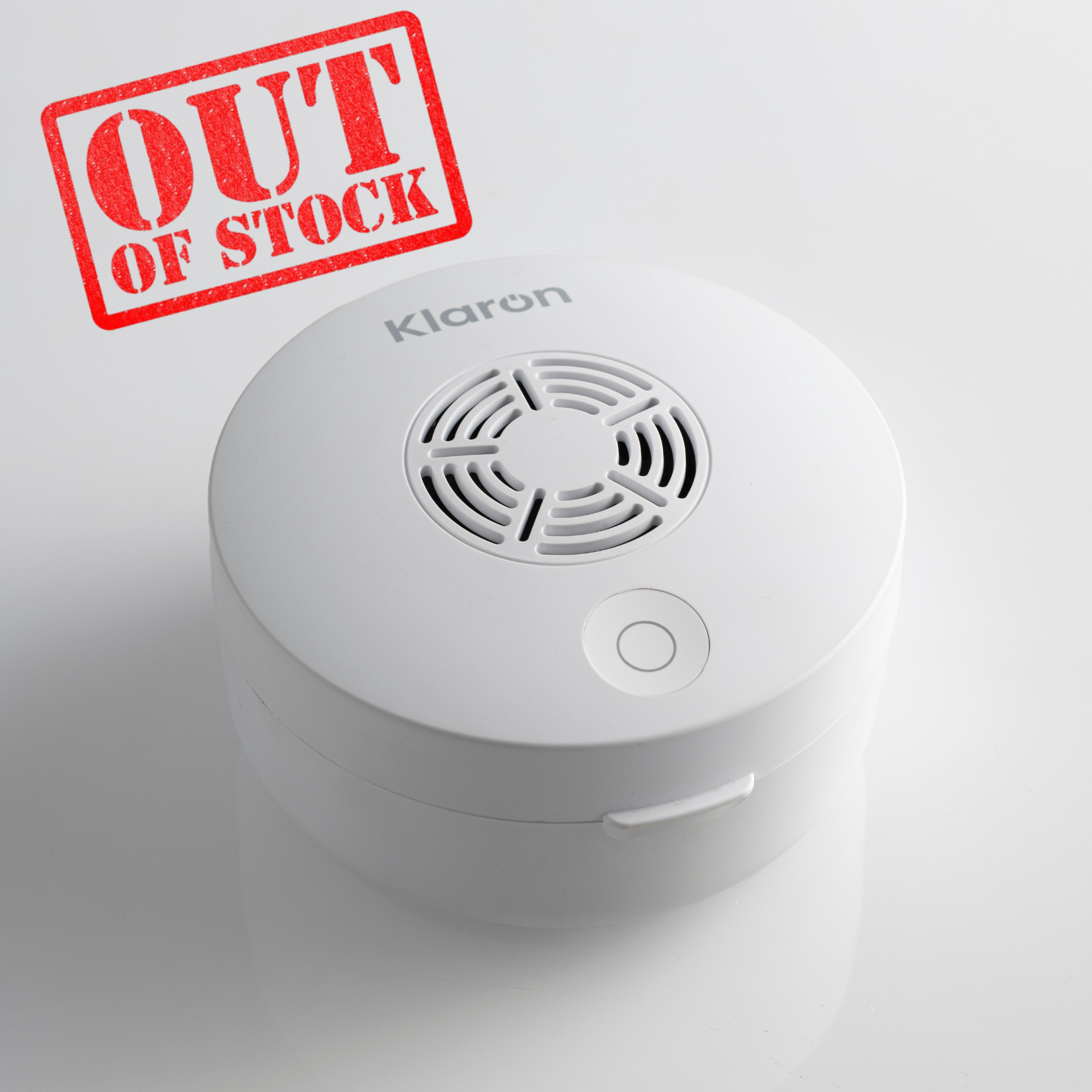
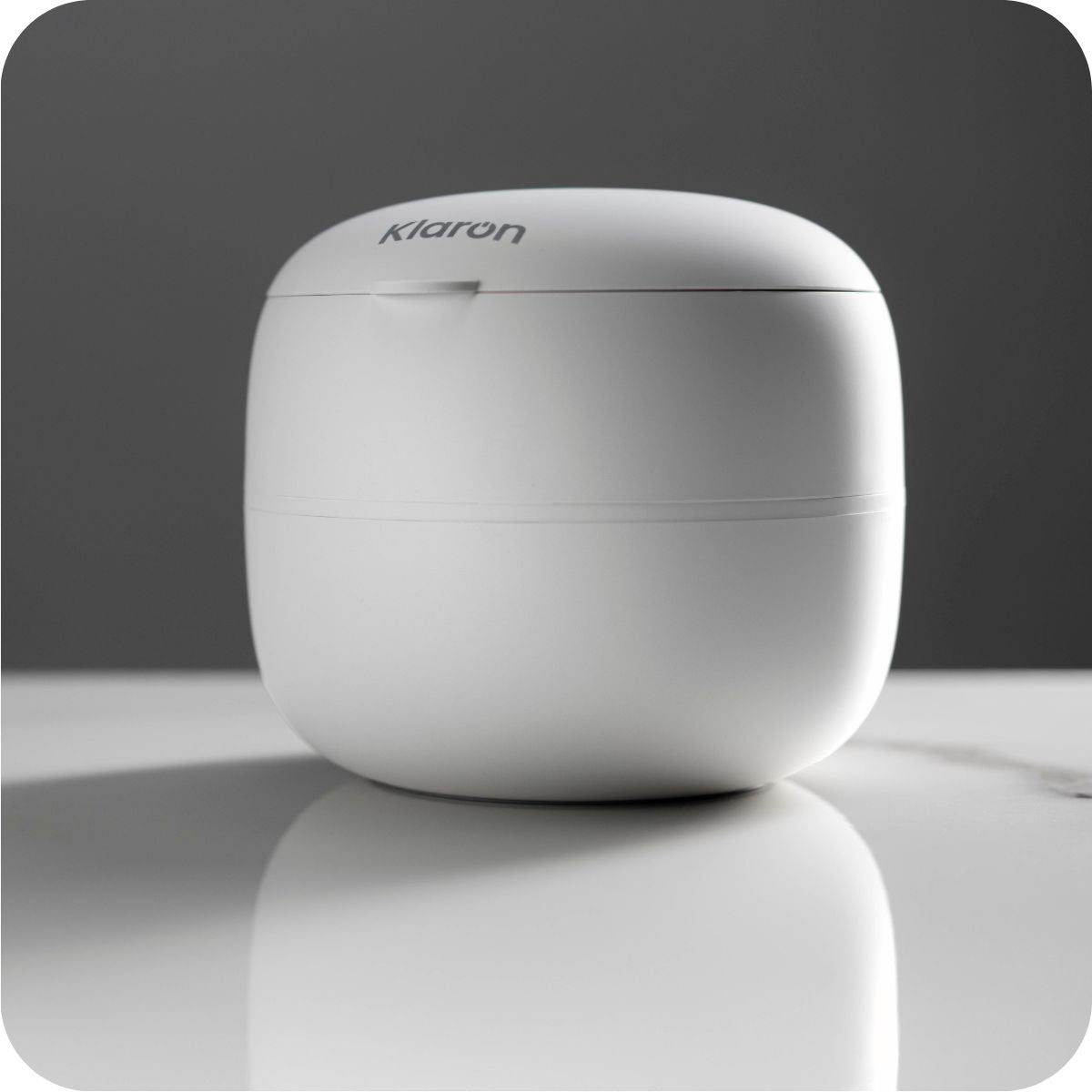
THE ultrasonic cleaners Today, they represent the most advanced solution for the hygiene of orthodontic appliances, removable dentures, bites, and night guards, as they provide a deep and gentle clean that goes beyond the limits of a simple toothbrush or effervescent tablets. Klaron, with its ultrasonic devices for home and professional use, leverages this technology to offer a concrete solution to the daily needs of patients and dental practices.
What are ultrasonic cleaners?
Ultrasonic cleaners are devices that use high-frequency sound waves to remove dirt, bacteria, and biofilm from surfaces immersed in a cleaning liquid. They have been used for years in the medical and dental fields to clean instruments and are now increasingly popular for aligners, dentures, and removable appliances.
Inside the device, we find a tank filled with water (possibly with a specific detergent), a generator, and transducers that transform electrical energy into ultrasonic vibrations. Klaron systems are designed to make this operation accessible both in the dental office and at the patient's home, with intuitive controls and preset cycles.
How ultrasonic cavitation works
The principle behind ultrasonic cleaning is the Cavitation , or the formation and subsequent implosion of microbubbles within the washing liquid. Ultrasonic waves generate rapid pressure changes, creating tiny bubbles that grow and collapse, releasing energy close to the surface being cleaned.
When these microbubbles implode near the appliance or denture, the energy released dislodges plaque, food debris, pigments, and biofilm, even from the most difficult-to-reach areas. Klaron exploits this effect to ensure uniform cleaning of the entire appliance, without mechanical friction or the risk of deforming the materials.
Why choose ultrasonic cleaning
Compared to manual cleaning, ultrasonic technology offers several advantages for those who wear orthodontic appliances or removable devices. This cleaning method is more consistent, repeatable, and penetrates into microcracks where a toothbrush or simple tablets can't reach.
Main benefits for daily hygiene:
-
Greater removal of bacteria and biofilm, with a reduction in the risk of inflammation and infections in the oral cavity.
-
Reduction of bad odors related to the accumulation of residues on appliances.
-
Improved aesthetics of aligners and bites, which remain more transparent and clean over time.
Klaron's ultrasonic solutions are designed to meet these needs: they allow patients to integrate an advanced hygiene protocol, comparable to professional standards, in just a few minutes a day. For dental practices, introducing a Klaron cleaner means offering an additional service consistent with clinical recommendations for appliance maintenance.
Safety on delicate materials
One of the most common concerns is the safety of ultrasonic cleaners on materials such as clear aligners, retainers, bites, night guards, and retainers. Ultrasonic technology, when designed for dental use, is non-abrasive and does not exert direct mechanical action on surfaces, but only through the action of microbubbles in the liquid.
Studies and guidelines confirm that cleaners specifically designed for oral appliances do not damage aligners or retainers over time, provided the correct power, frequency, and temperature parameters are followed. Klaron devices are specifically designed for the dental field, with settings optimized for orthodontic plastics and resins, ensuring deep cleaning without deformation or microfractures.
For practices that treat many cases with clear aligners or custom bites, offering a Klaron system means providing a home care solution consistent with the gentleness of these materials. Patients thus experience a comprehensive care plan: from treatment planning to daily, completely safe device management.
Frequencies, power and functionality
Not all ultrasonic cleaners are created equal: frequency, power, and additional features influence both the effectiveness and gentleness of the cleaning process. In the dental field, ultrasonic frequencies around tens of kHz are typically used, sufficient to generate effective cavitation without being excessively aggressive on surfaces.
Key elements to consider in a dental device:
-
Ultrasonic frequency : stable and calibrated values to remove biofilm and plaque while respecting sensitive materials.
-
Controlled power : enough to maintain uniform cavitation action, without overheating the water or stressing the plastics.
-
Timer and preset programs : 5-10 minute cycles for daily or more intensive cleaning, ideal for highly contaminated appliances.
-
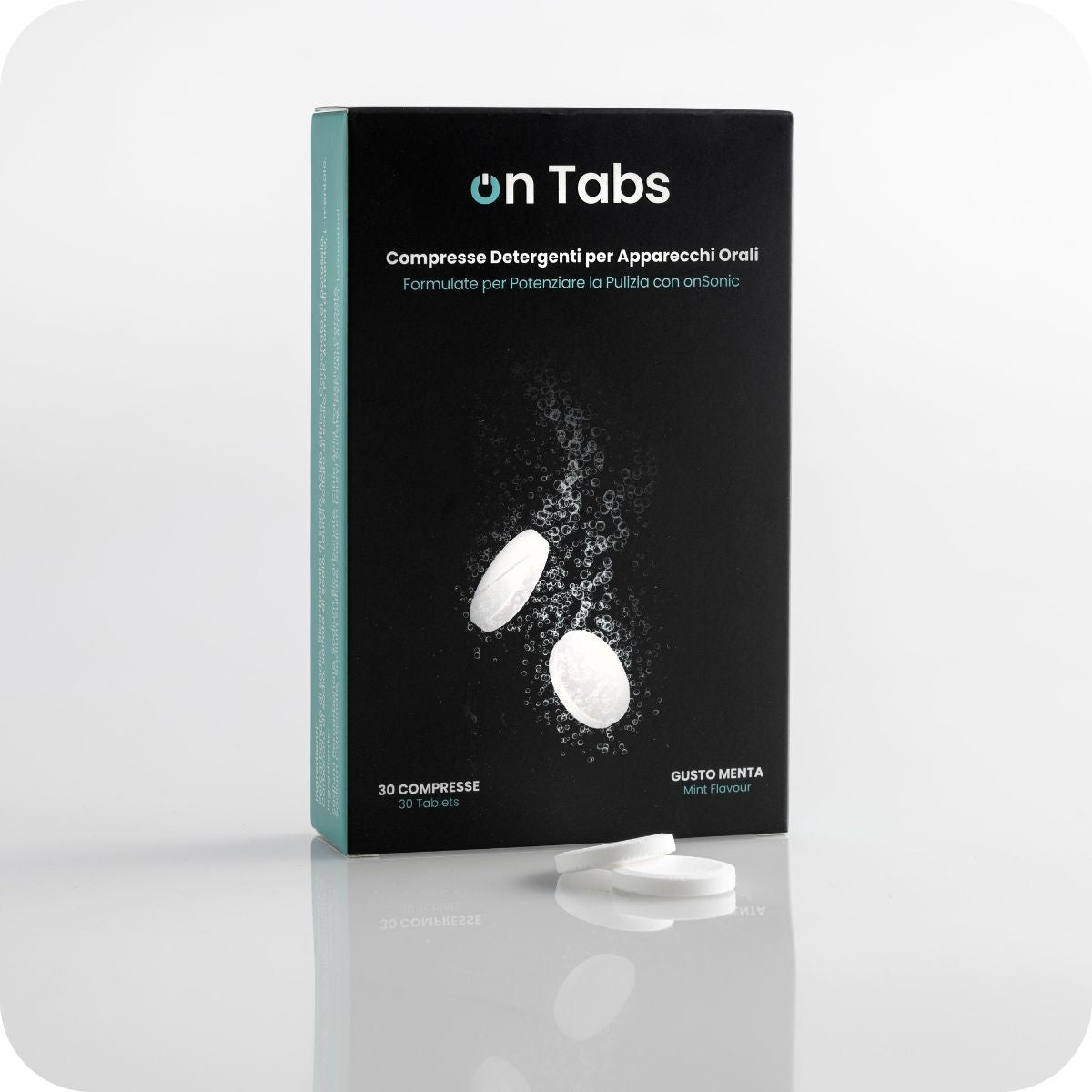
Tank materials : steel tank or corrosion-resistant materials, compatible with any detergents or tablets.
Klaron cleaners are designed to simplify these choices: users don't have to configure complex parameters, but can rely on programs designed for orthodontic appliances, dentures, and bites, reducing the risk of improper use. For dental practices, this means offering a reliable device, aligned with clinical needs, and easy to explain to patients with just a few instructions.
Why Klaron meets new dental hygiene needs
The increased use of clear aligners, retainers, and removable devices has made hygiene management a critical issue for both patients and professionals. Manual cleaning alone, often irregular and hasty, is no longer sufficient to ensure high hygiene standards or prevent odors, stains, and persistent biofilm.
Klaron fits into this scenario with ultrasonic cleaners designed specifically for dentistry, capable of:
-
Easily integrate into your daily home hygiene routine, with short, automated cycles.
-
Support dental practices in offering truly effective and easy-to-follow maintenance protocols.
-
Protect the delicate materials of modern appliances, preserving their transparency, shape, and durability over time.
Choosing a Klaron device means transforming a daily criticality, the thorough cleaning of the device, into a quick, controlled and technologically advanced gesture, in line with the expectations of patients attentive to hygiene and the quality of their treatment.